😬 Most writers panic when they see the word “credits.”
You are used to simple math. You pay a subscription, you get a word processor. Or maybe you pay a flat fee and get unlimited words. Then you open Sudowrite, look at the pricing page, and see millions of credits staring back at you.
The anxiety kicks in instantly. Will I run out? Is this going to cost me a fortune? How much is a single chapter actually going to cost?
😌 Stop worrying. You need to reframe how you look at this system.
Credits are not a limitation designed to stop you from writing. They are a creative currency. Just like you budget your time or your emotional energy, you budget your AI interactions. When you understand how does Sudowrite credits system work, you stop burning through your allowance and start investing it where it matters.
📝 This guide is your financial crash course. You are about to become the CFO of your own novel.
What Are Sudowrite Credits and How Do They Work?
🔪 Let’s kill the biggest myth right now: 1 credit does not equal 1 word.
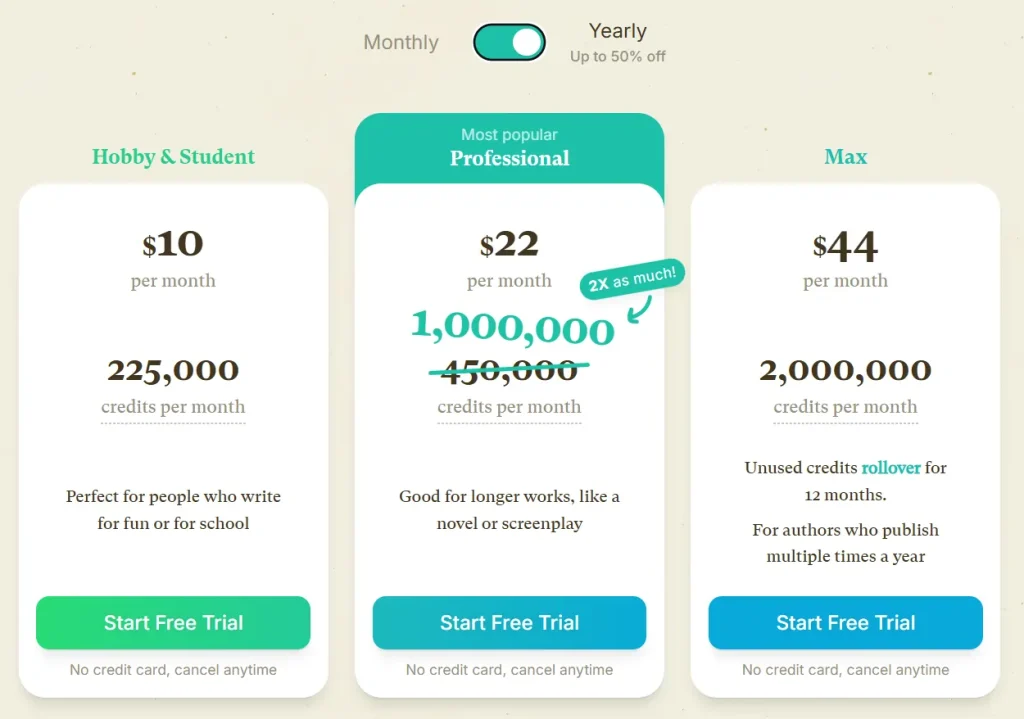
If you assume every credit in your account corresponds to a single word of text, Sudowrite pricing explained simply won't make sense. You will think it is far more expensive than it actually is.
Credits are tokens used to pay for computing power. Every time you ask the AI to do something, it costs the server energy. That cost is calculated based on three specific factors:
- The Words It Reads (Input): The AI has to read your previous paragraphs, your character sheets, and your style guide to know what to write next.
- The Words It Writes (Output): The actual text it generates for you.
- The Brainpower (Model): Smarter models (like the ones that handle complex prose) cost more credits than faster, simpler models.
💰 EXCLUSIVE OFFER: 200K Bonus Sudowrite Credits
Ready to start your draft? Don't go in empty-handed.
Get 200,000 bonus credits when you subscribe using our special link!

Think of it like hiring a contractor. You pay them for the time they spend studying your blueprints (reading context) and the time they spend building the house (generating words).
⭐ Real-World Example:
The Professional Plan offers 1,000,000 credits per month.
The “cost” is entirely in your hands.
💳 The Credit Cost Spectrum: From Sips to Gulp
To answer the question “how to save Sudowrite credits,” you have to know which buttons burn cash and which ones are cheap. Not all features are created equal.
We can break down the platform’s tools into three categories: Sips, Drafts, and Gulps.
| Category | Cost Level | Typical Features | Why It Costs This Much? |
|---|---|---|---|
| The Sips | Low | Describe, Rewrite, Write (Short) | The AI reads very little context and produces only a few sentences. Highly efficient. |
| The Drafts | Medium | Expand, Write (Auto), Story Bible Gen | The AI reads a moderate amount of text (like a full chapter outline) and writes a few paragraphs. |
| The Gulps | High | Chapter Generator (Draft Tool) | The AI holds your entire Story Bible in its memory and generates 2,000+ words at once. |
| The Freebies | Zero | Quick Chat, Quick Edit | Certain models and tools are free by default. Use these liberally! |
💀 The Danger Zone: The “Gulp”
The most expensive button on the interface is the “Generate” button inside the Draft tool (often used for writing full chapters from beats). This is a “Gulp.”
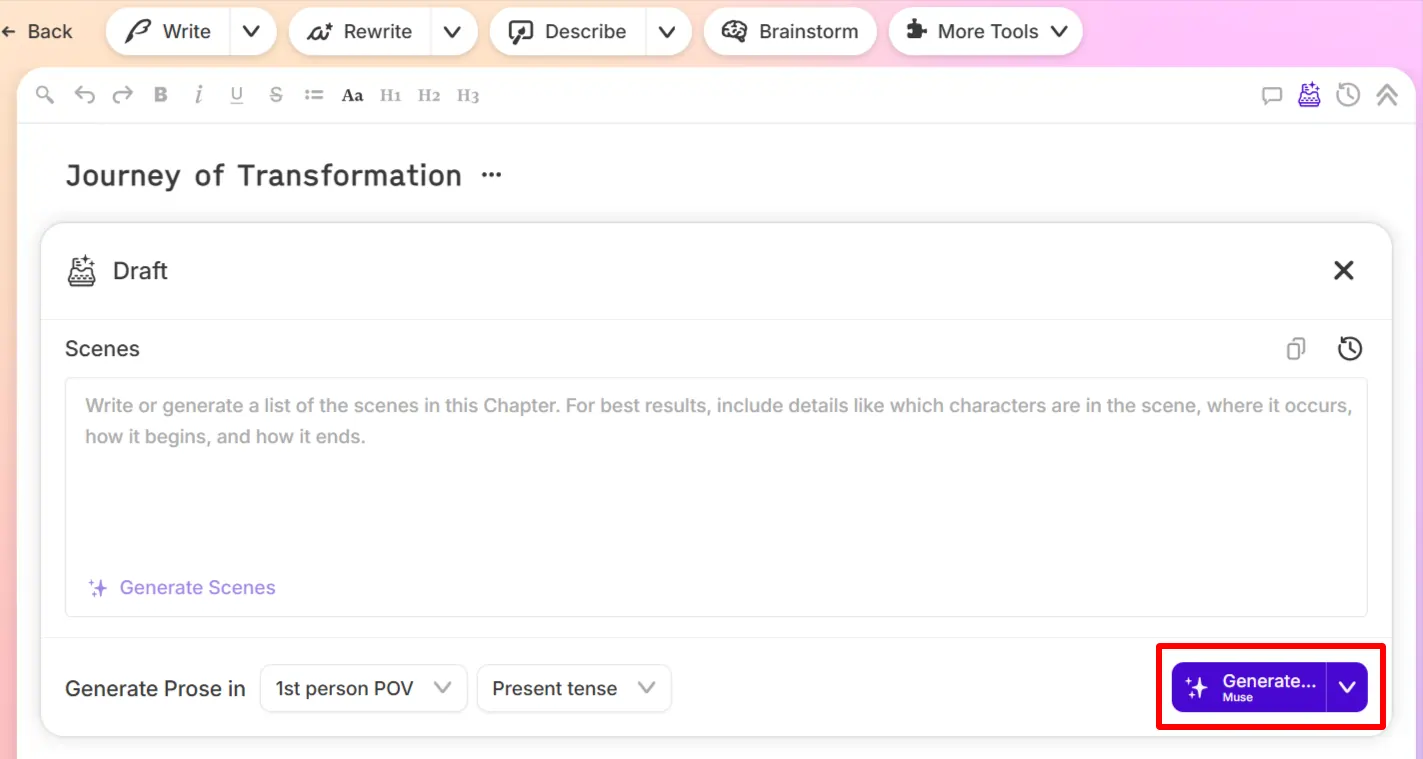
Why? Because the AI loads your characters, world-building details, synopsis, and outline beats all at once. It reads thousands of words before it types a single letter. Then, it generates a massive block of prose. That combination—massive input plus massive output—drains your balance fastest.
Are Sudowrite credits worth it for these features? Absolutely, if you need a heavy lift. But you shouldn't use a crane to pick up a pencil.
✍ Strategic Workflows for Maximum Efficiency
Now that you know the math, let's talk strategy. You don't need to stop using the powerful tools; you just need to use them at the right time. Here are four specific workflows to stretch your budget.
Strategy 1: The “Human First, AI Second” Approach
The most efficient way to write is to draft the ugly version yourself.
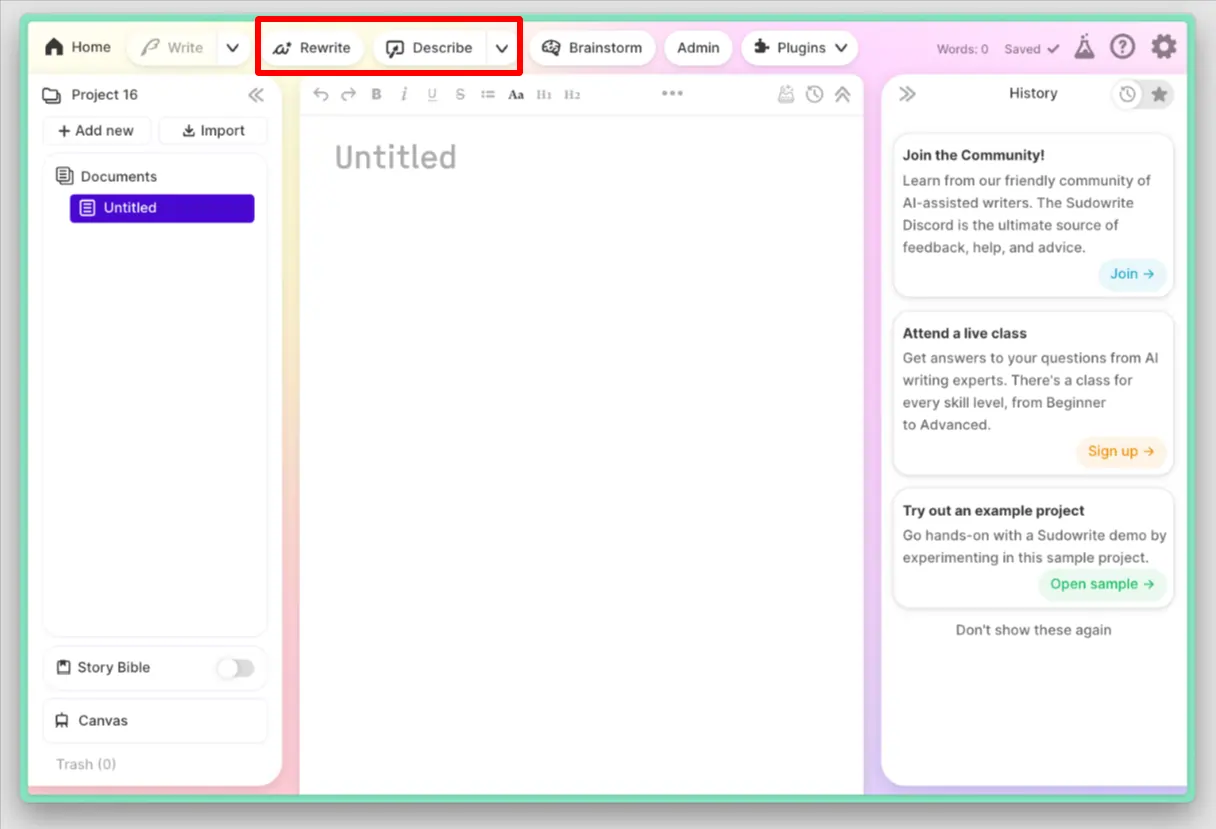
Write your scene. Don't worry about descriptions or flow. Just get the dialogue and actions down. Once you have 1,000 words of rough human prose, use the Rewrite and Describe tools to polish it.
Strategy 2: The “Generate and Refine” Loop
If you hate drafting, use the “Gulp” features sparingly. Use the Draft tool to generate one chapter. Get the structure, the pacing, and the core ideas on the page.
Then, stop generating.
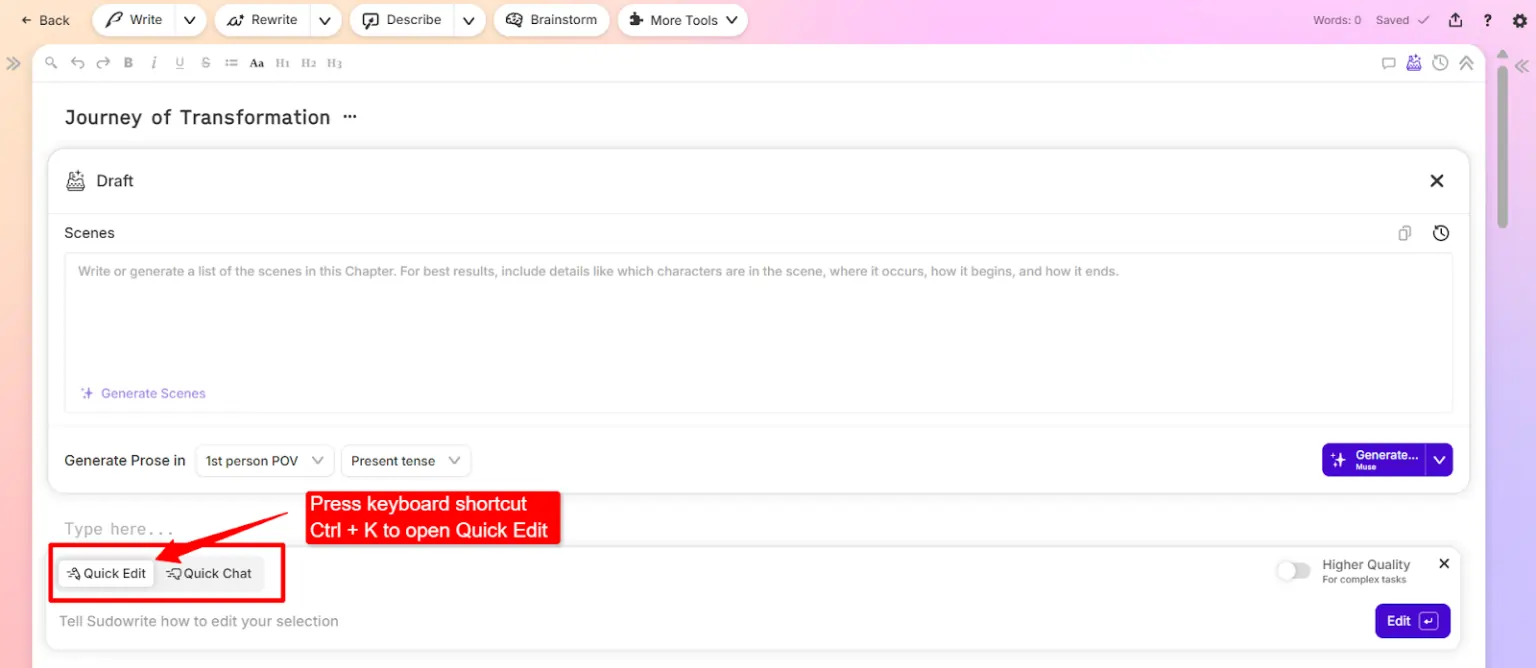
Switch to manual editing. Use the Quick Edit (which is often free or very low cost) to tweak sentences. Use Rewrite on clunky paragraphs. Do not press “Generate” again until you have milked that first draft for everything it’s worth.
Cost Comparison:
Strategy 3: Master the Context Window
The “Write” button (the auto-complete feature) looks back at your document to understand what is happening. It usually reads the last 1,000 words or so.

Copy the last paragraph into a new, blank document. Hit “Write” there.
The AI reads 50 words instead of 1,000. The output is the same, but the input cost drops drastically. This is how power users stretch their subscriptions.
Strategy 4: Use ‘Draft' for Structure, Not Prose
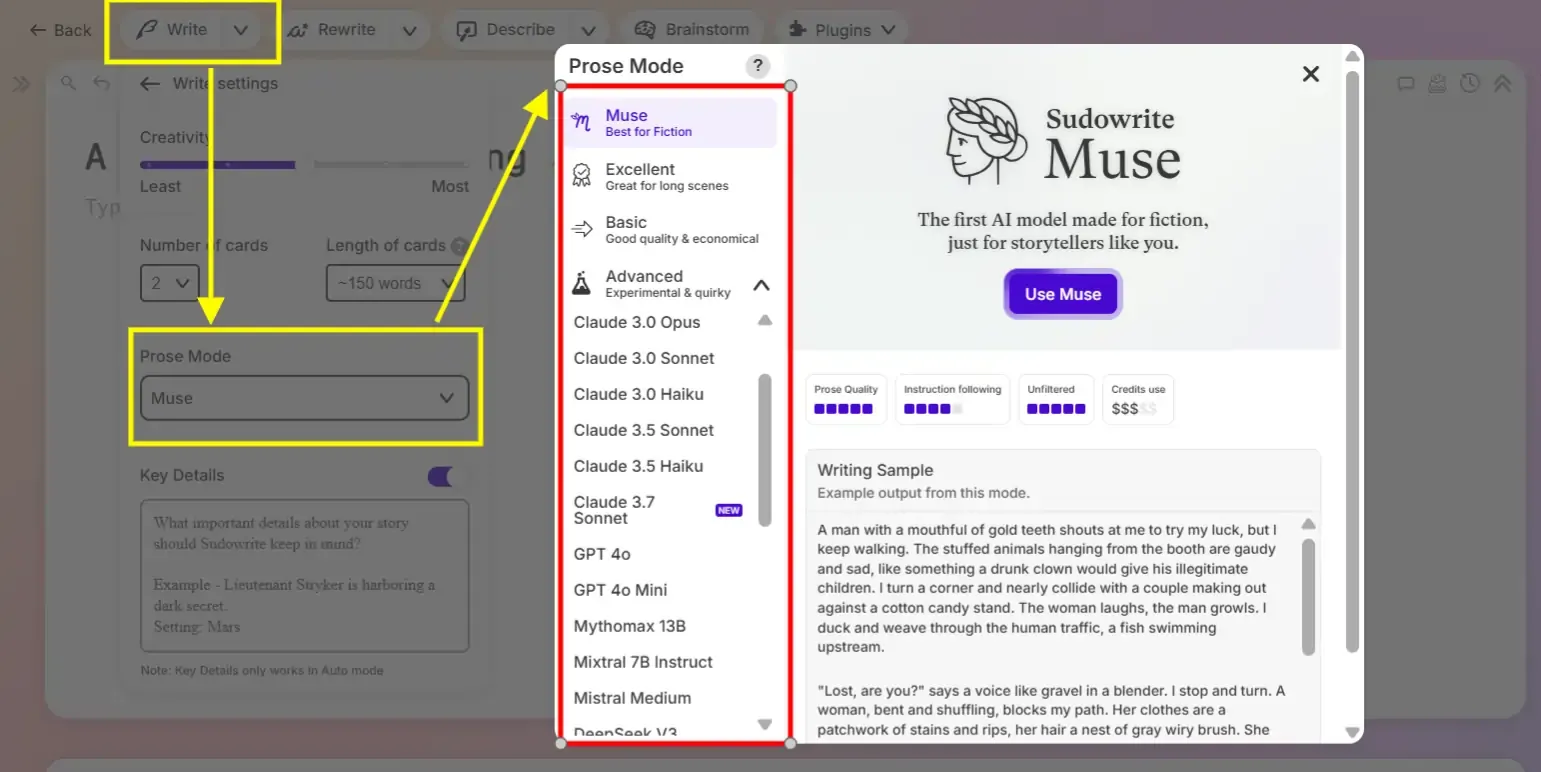
Sometimes, the prose isn't the point.
Advanced users often run the high-cost Chapter Generator just to see how the AI handles the pacing. They read the output, think “Aha, that's a great way to handle the transition between scenes,” and then… they delete the text.
They rewrite the scene themselves using the AI's structure as a map.
This sounds counter-intuitive (you paid for words you deleted), but it is actually high-value. You bought a structural blueprint for the price of a chapter generation. If that blueprint helps you write a better book faster, those Sudowrite credits were well spent.
📍 Tracking Your Usage
You cannot manage what you do not measure. Sudowrite provides a transparent log of exactly where your credits are going, but most writers ignore it.
Go to your account settings and look for Recent Activity.
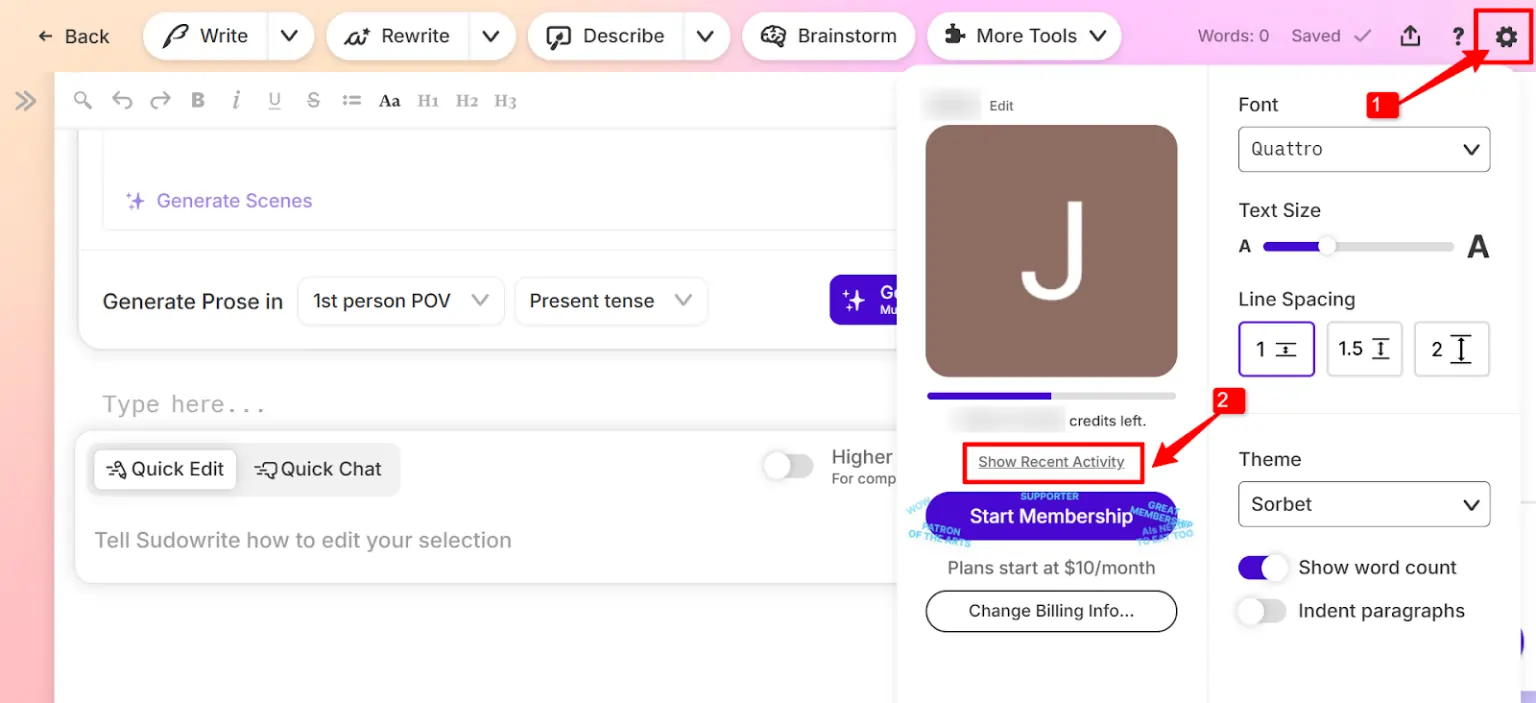
This log is your bank statement. It shows every single action you took, which feature you used, and exactly how many credits it cost.
How to Audit Yourself:
- Open the log after a writing session.
- Look for the biggest numbers. Did a single click cost 5,000 credits?
- Ask yourself: Did that click give me 5,000 credits worth of value?
If you see a lot of high-cost actions that resulted in text you deleted, you have found a leak in your budget. Plug it by switching to a “Human First” workflow for those difficult scenes.
📝 Case Study: The Turnaround
Consider “Jane.” Jane used to burn through her monthly allowance in ten days because she used the Draft tool for every single scene. She treated the AI like a ghostwriter.
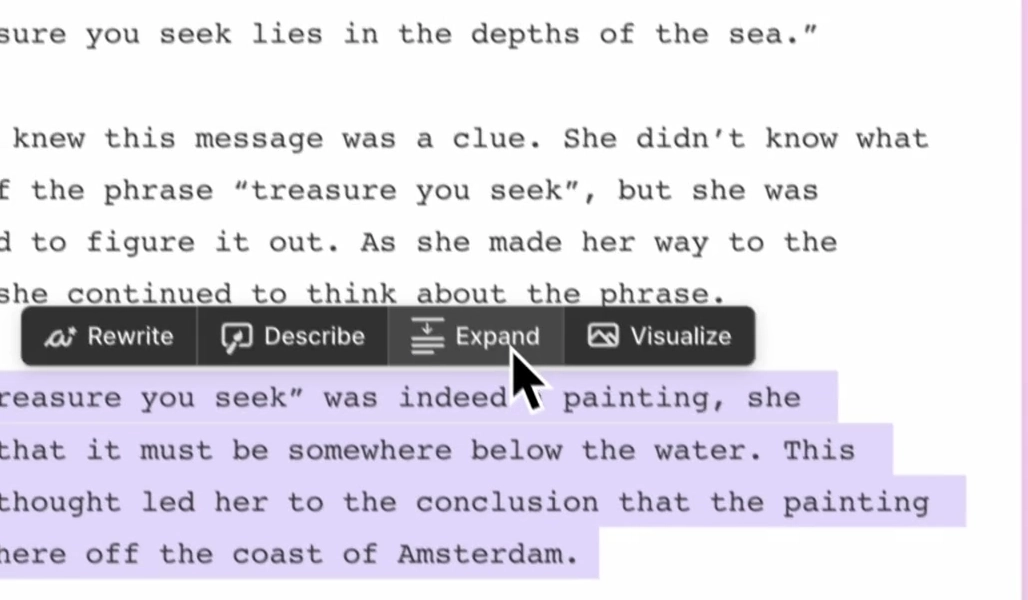
She switched to the Generate and Refine loop. She started writing her own skeletal outlines and using the Expand tool (Medium cost) instead of the full Draft generator.
⭐ The Result: Her credit usage dropped by 40%, but her word count actually increased. She wasn't writing less; she was writing smarter.
Conclusion: You're the CFO of Your Novel
Sudowrite credits are not a ticking clock. They are a tank of gas. You can drive with your foot floored on the pedal, burning fuel to get somewhere fast, or you can cruise efficiently to make the journey last longer.
The system is designed to be flexible. It supports the “sips” of the careful editor and the “gulps” of the power drafter. The choice of how to spend is yours.
👉 Your Challenge:
Next time you log in, try this experiment.
- Write 500 words yourself.
- Use the Describe tool on three specific sensory details (Sips).
- Check your Recent Activity log.
Compare that cost to generating 500 words from scratch. Once you see the numbers, you will never look at that credit counter with fear again.
Ready to maximize your budget?

Sudo Coupons Recommends:
Affiliate Disclosure: This post may contain some affiliate links, which means we may receive a commission if you purchase something that we recommend at no additional cost for you (none whatsoever!)